Germany - 5
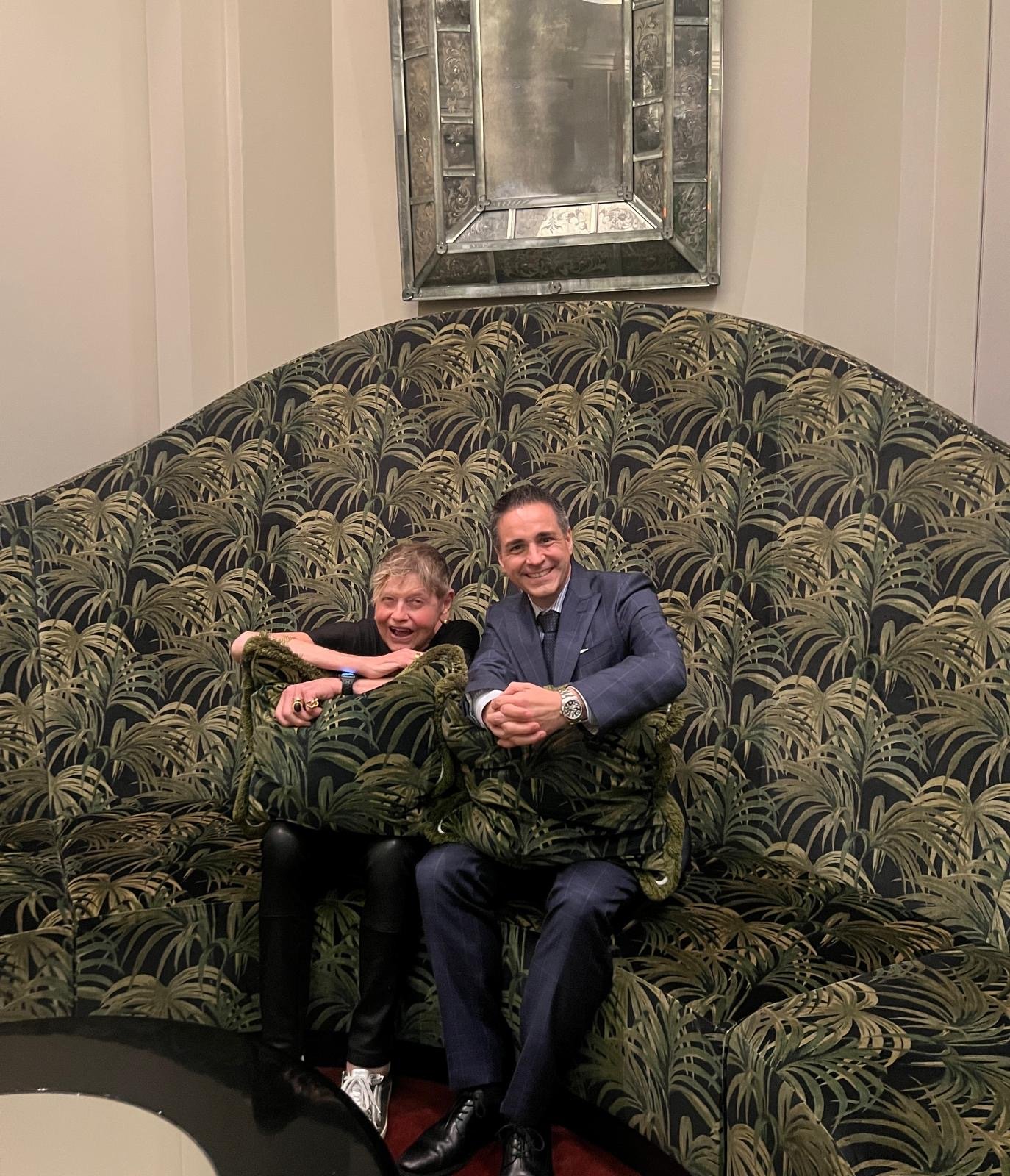
Most men would be overwhelmed, but not José Ortiz Romero. He sits supremely in one of the four corner mega-sofas of the main lobby of Hotel de Rome in Berlin - he's a longtime Four Seasons guy, and his role at Hotel de Rome is to get it ready for rebranding. This incredible building on Bebelstrasse was built in 1887 to house Dresdner Bank. It was designed by Ludwig Heime in the style of an Italian palace in Renaissance times. After 1945, the bank became the State Bank of the GDR.
In 2024, the building, by now already a 145-key hotel, was bought by the mighty Grupo Statuto, who are going to do great things with it. Girlahead was in corner room 104, office, 1974-1990, of the then-President of GDR Bank, Horst Kaminsky It's an imposing room, about four by four meters. It's wood-paneled up to the height of 2.5 meters, and the wall behind the bedhead still bears pock marks from Allied shelling during World War II. A matching wood corner cabinet must have held Kaminsky's books and trophies.
Possibly inspired by its name, Hotel de Rome today offers partly-Italian food by night, say outstanding burrata followed by a ‘veal cutlet’, a Wiener schnitzel by any other name, complemented by marvellous mash. A tasting of rosés led to a glass of Rosa dei Frati, vino rosato, 2025, Cadei, This was the dining venue of choice of besuited Berlin bankers and bureaucrats. At breakfast quite the other way. The room was flooded by morning daylight, egg suggestions include a selection of eggs Benedict and there are also plentiful supplies of the FT, NYT and Der Spiegel.
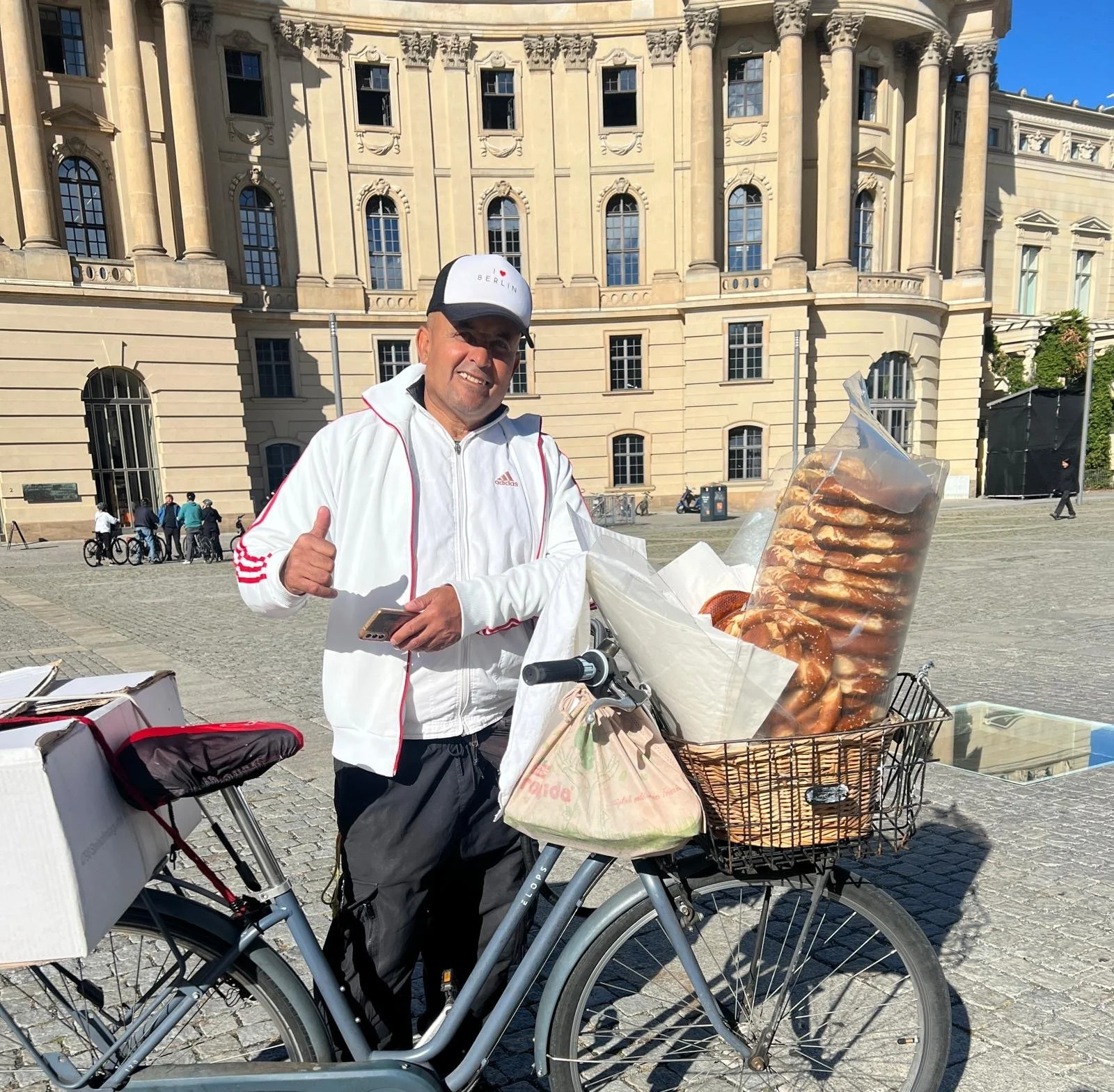
The hotel looks over Bebelplatz, named in 1947 for August Bebel, 1840-1913, politician and co-founder of the German Social Democracy. Until 1947 the square was Platz am Opernhaus - the opera house is on the right side of the Bebelplatz, looking out of Hotel de Rome. Cycling tourists, usually in groups of eight to ten, are invariably stopped for a few minutes by their tour guide, to peer down through a glass panel, about 1.25 by 1.25 meters, set flush with the square’s cobbles. In between curious cyclists, a hotel concierge, leading a party of one, explained why looking down through the glass reveals totally empty shelves of a subterranean library, a reminder that on 10th May 1933 Hitler ordered over 20,000 books from the Humboldt Law University, on the opposite side of the square, to be burned…..