London 4
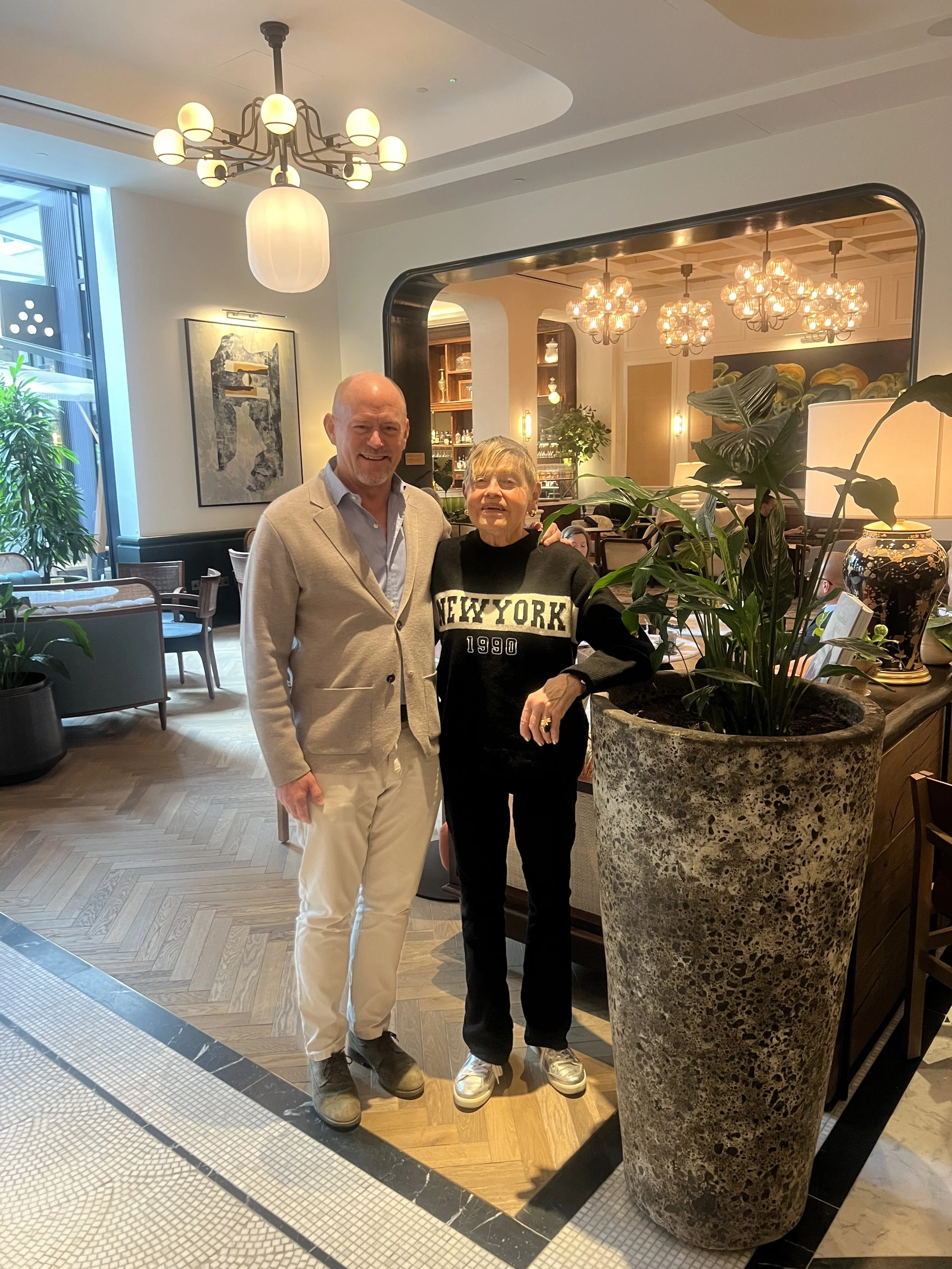
Yes, Six Senses London is theatre, and Nick Yarnell, above, is producer, director, and lead star, accompanied by Stefan Müller, his patient, director of sales and marketing in the main supporting role. Why patient? Well, they’ve been waiting for the opening of Stering Group’s conversion of the 1863-vintage Whiteley’s department store for a long time. Last supposed opening was June 2025, but here we are in 2026, and the hotel opened about a month ago.
The designers, AvroKo, have left much of draper William Whiteley’s original architecture. Enter into a splendid reception area where glass display cases, instead of having handbags and jewellery, now have some of the 1,000-plus living green plants of all sizes and types that are the main decoration throughout the whole. It’s brilliant. There’s lots of wrought iron, there’s lots of tile, and there’s lots and lots of greenery.
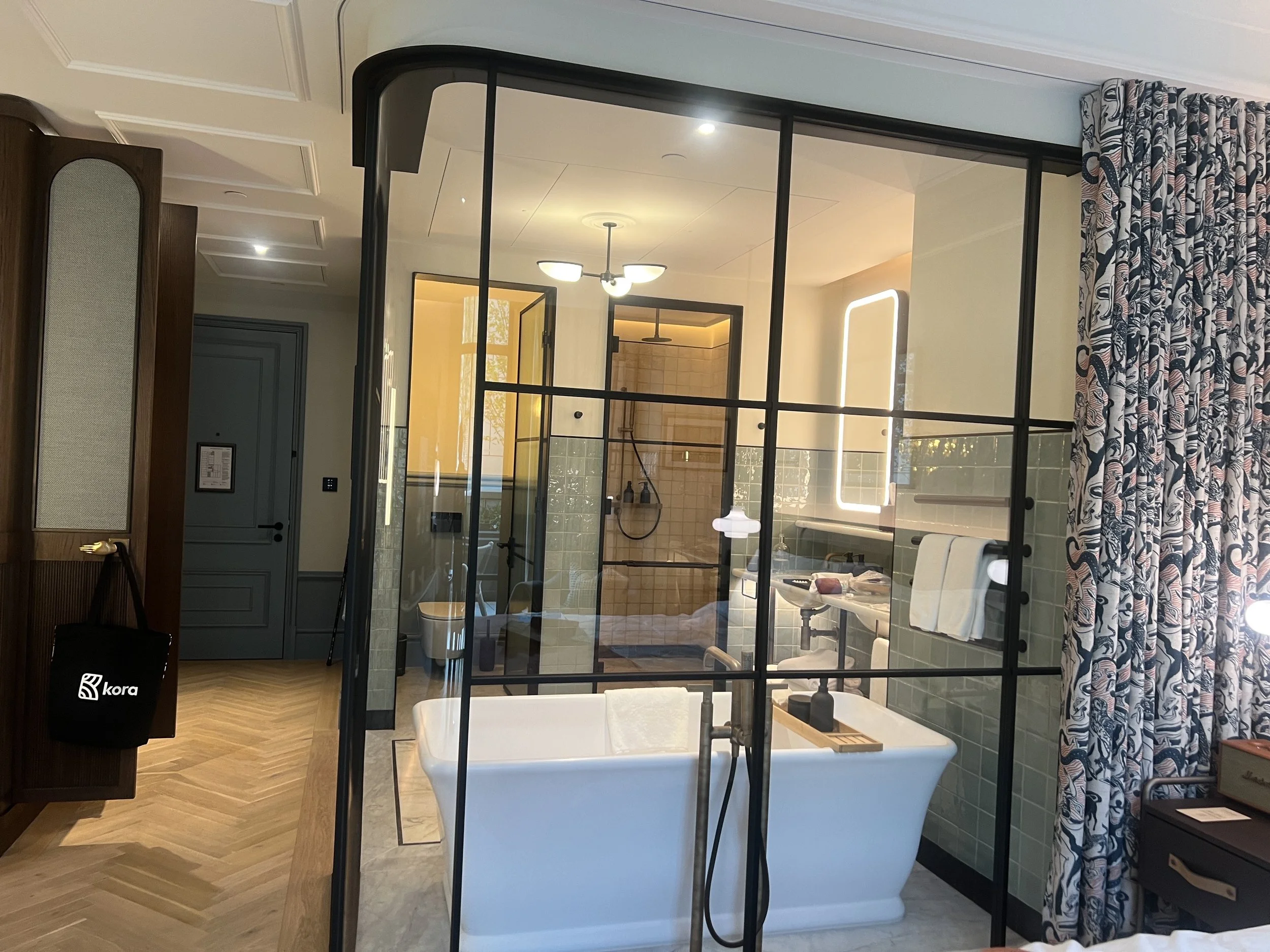
Girlahead’s already raved about the basement with the pool, which will be open shortly, and the fantastic wellness -fitness area and spa, and the alchemy bar-apothecary. The bedrooms, once again, are 1863 meets 2026. From the bathroom, you look through the bedroom to outside. From the bedroom – see below – you look back to the bathroom through this very sexy curved glass wall, over which a patterned curtain can simply be pulled across. No zapper, just pull.
There’s co-working galore. WFW or WFSS. On the main floor, day long, there are people in the bar area, which flows into the lobby lounge, which flows into the main food area. Food and drink are also vital ingredients of all Six Senses. And Whiteley’s Kitchen, which runs into Whiteley’s Bar and Whiteley’s Lounge and Whiteley’s outdoor terrace. Whiteley’s Kitchen is a modern take on all-day dining, a tall airy room with wood tables and ceramics and dull bronze Studio William cutlery. Over lunch, Chef Eliano Crespi sent out a selection of fermented things – Girlahead’s favourite was creamed beetroot. She also liked a kombucha and she loved the homemade sourdough – sensational.
In fact, baking and making pastries and presumably desserts is something that really stands out at this Six Senses. The size and the appearance of the croissant, for instance, on the breakfast buffet, were awe-inspiringly tempting. When breakfast service is over, a big selection of fabulous edibles is put on a display stand at the back of Whiteley’s Bar, presumably for the co-workers who want a little bit of a nibble. Back to lunch, the beef blade main course was an interesting dish. It was from a ‘mature cow’ and it was served with barley and walnut-sized lumps of cottage cheese – it was more like a thick soup and, rather than but, it was jolly good. Crespi said he’d developed this just by trying it.
The words creativity and invention come up again and again when thinking of Six Senses London. Who had the idea of turning a department store into a hotel? Who then realised the importance of leaving a larger-than-life stone bust of William Whiteley, the draper who inspired it all, leaving the bust in the centre of an otherwise all-green courtyard, overlooked by the kitchen, the bar, and the lounge? Who had the idea for those glass walls in the bedrooms? The whole thing is a theatrical testament to how creativity and inspiration can turn what could have been a really mundane project into an exciting and already loved five-star place. to stay, work, eat, and feel a lot better.