OWO - 1
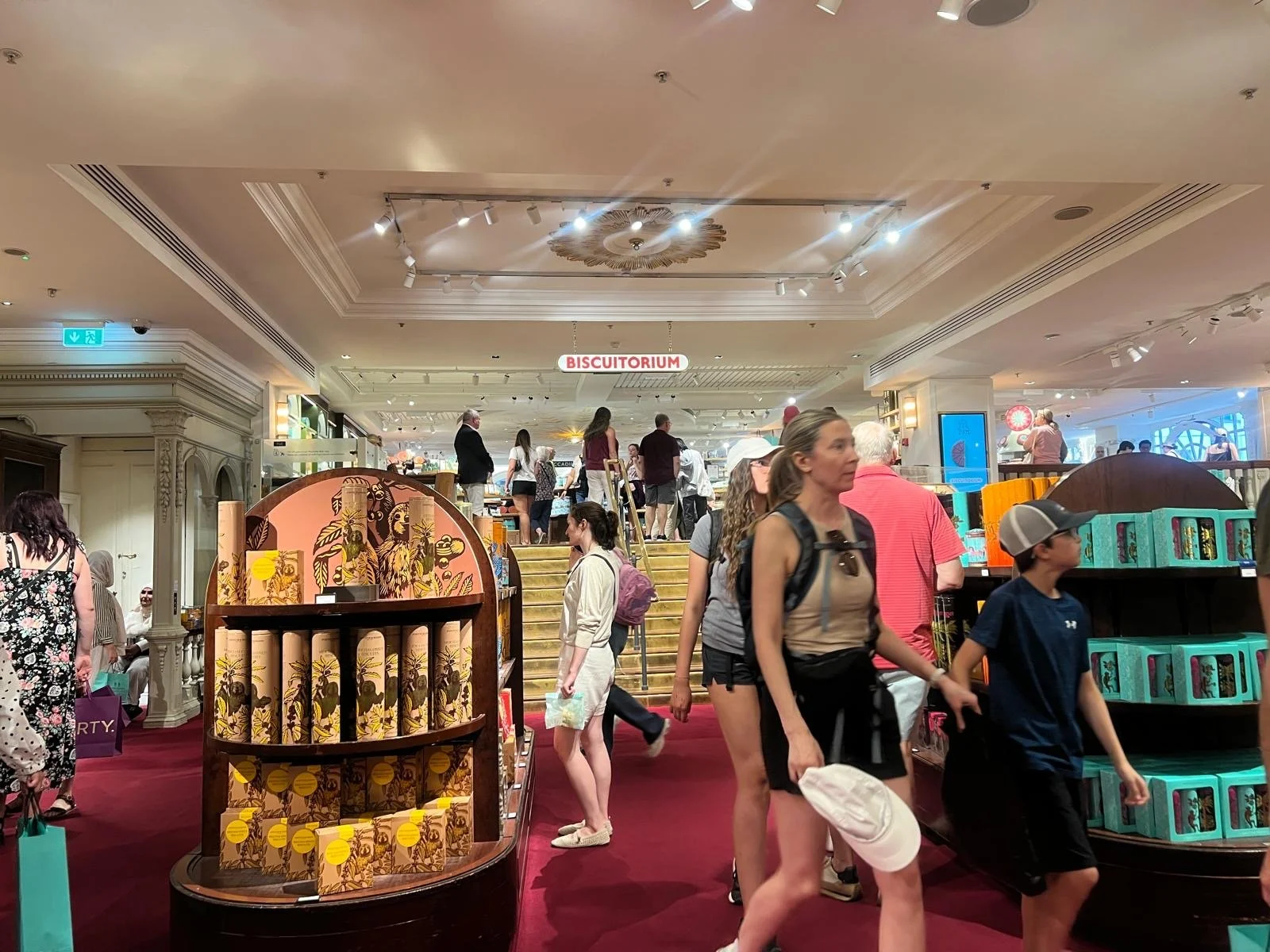
Well, Harrods is being kicked down into second place when it comes to tourist shopping for food. Winner is Fortnum & Mason, still at 181 Piccadilly see above. The Biscuitorium was so packed you couldn’t move. Americans, Arabs and Japanese were piling turquoise-wrapped packs of cookies and preserves as if they were going to have to bunker.
After braving that decidedly upmarket mêlée Girlahead navigated the admittedly more-diverse crowds outside to go back to the office, the Old War Office, that is generally simply called the OWO. The splendid, marvellous, Raffles London at The OWO is honestly a perfectly converted use for an Edwardian Baroque building put up in 1906 by architects William Young and Clyde Francis Young. It's now been open three years, and the Hinduja Brothers’ treasure has settled into not exactly a rut, but into a state of mind where it feels comfortable. This is not the place to stay if you are interested in shopping. It's too far from any big shopping areas. It's not the place to stay for all-night raves. It IS where people are flocking to be at the centre of London's history and culture. It's only a few minutes’ walk from the Thames and Buckingham Palace, and more than anything, it itself has so much history. During World War II, for instance, it was the centre of spy keeping and intelligence. Churchill had his office here. James Bond was conceived here. Harry Potter escaped under an adjacent archway, apparently.
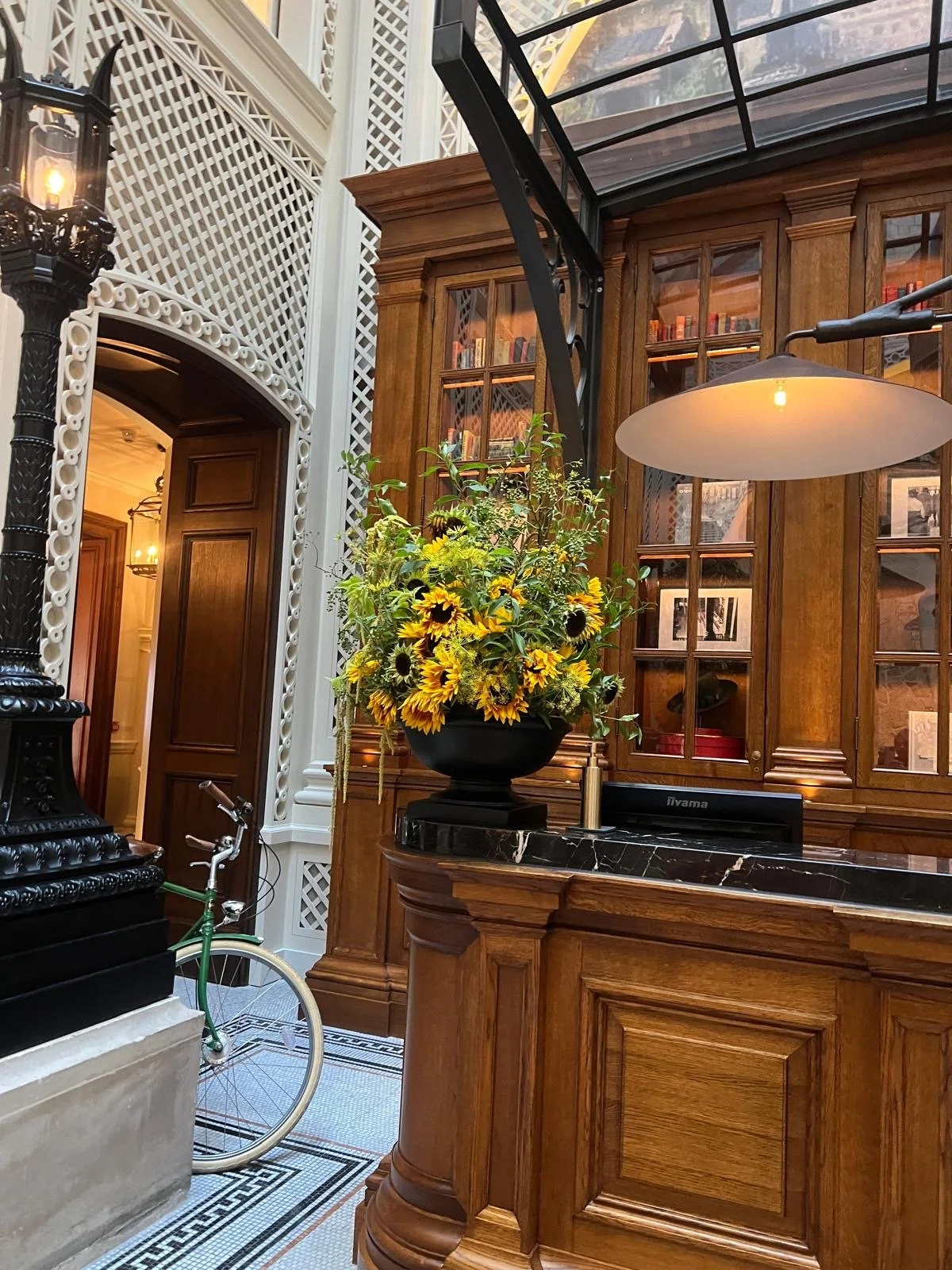
Raffles London at The OWO has to have one of the most splendid concierge stations anywhere (it’s so magnificent one can imagine Raffles’ brand-logo butler draped decorously along the counter). There’s a tall waterless fountain in the centre of the room. One whole wall is a mural of a medieval London map. Behind the panelled desk is a clock that well could have graced London's Paddington Station. There are, also, two bottle-green bicycles that are exact copies of the Pashleys on which couriers used to cycle around the building delivering urgent messages – today headquartered in Stratford upon Avon, Pashley Cycles had been started in Birmingham by Rath Pashley a hundred years ago, in 1926. Yes, the proportions of the building are enormous. It took 25 million bricks, 26,000 tons of Portland stone, and 3,000 tons of York stone, resulting in 3.5 miles of corridors over five floors...